

 Send Email
Hex nuts and lock nuts serve different purposes in fastening applications, and selecting the right type depends on vibration resistance requirements, torque retention needs, and installation environment. This guide compares these two fastener categories to help engineers, maintenance professionals, and procurement specialists make informed decisions for their specific use cases. Understanding the mechanical properties, cost considerations, and industry standards governing each type ensures reliable assembly performance and reduces equipment failure risk.

What Are Hex Nuts?
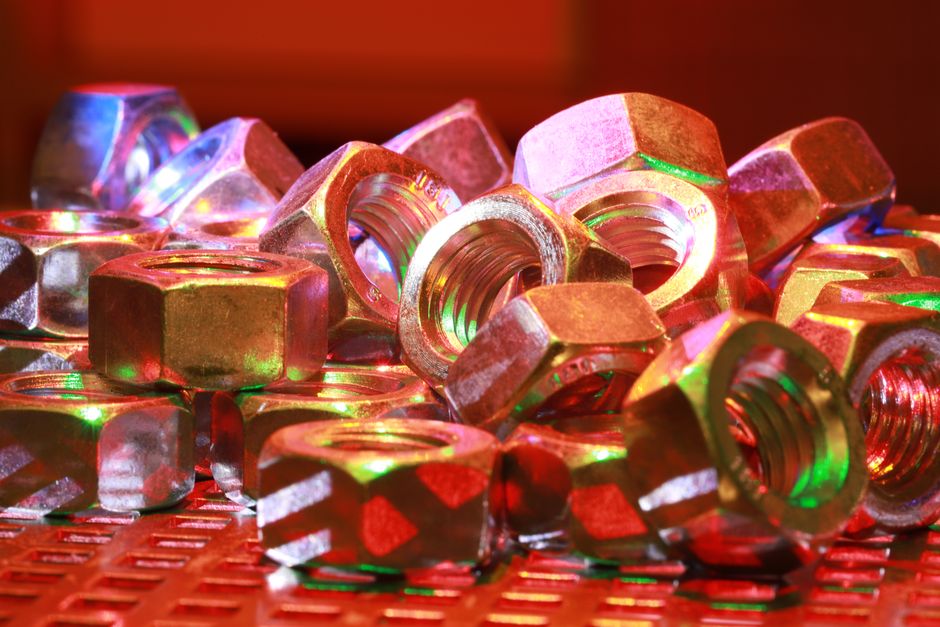
A hex nut is a standard hexagonal fastener with internal threads designed to mate with a corresponding bolt or threaded rod. According to the International Organization for Standardization, these standard fastener standards define precise dimensional specifications that ensure interchangeability across manufacturers. Hex nuts feature six flat sides that allow wrench engagement for tightening and loosening operations. The standard configuration includes a chamfered top edge and a bearing surface that distributes load evenly against the joined material. These fasteners are manufactured from carbon steel, alloy steel, stainless steel, and brass, with surface treatments including zinc plating, hot-dip galvanizing, and black oxide coating to provide corrosion resistance. Our hex nuts all series products comply with DIN934, DIN985, DIN6923, A194 2H, and ISO4032 standards across various size ranges from 1/2 inch upward.
What Are Lock Nuts?
A lock nut, also called a prevailing torque nut, features a built-in locking mechanism that resists loosening under vibration and dynamic loading conditions. Unlike standard hex nuts, lock nuts maintain clamping force through friction created by deformed threads, nylon inserts, or locking flanges. Industrial applications in machinery, transportation, and construction frequently specify lock nuts where sustained vibration could compromise joint integrity. The locking feature typically engages within the first few threads of engagement, creating resistance that prevents spontaneous back-off. Common lock nut variants include nylon insert nuts, split beam nuts, and center-lock nuts, each employing different mechanisms to achieve prevailing torque. Selection criteria should consider temperature range, reusability requirements, and the specific vibration profile of the application.
Key Mechanical Differences
The fundamental difference between hex nuts and lock nuts lies in their response to vibrational and dynamic loads. Standard hex nuts rely entirely on the clamp load generated during installation to maintain joint integrity. When external vibration introduces cyclic loading, the fastener can gradually loosen as the clamping force decreases. Lock nuts introduce an additional friction element that must be overcome before the nut can rotate, effectively adding a mechanical barrier to loosening. This characteristic makes lock nuts particularly valuable in applications where regular inspection is difficult or where vibration exposure is unavoidable. Cost-wise, lock nuts typically command a 30-50% premium over standard hex nuts, but the added expense often justifies itself through reduced maintenance intervals and fewer joint failures. The decision framework should weigh initial cost against lifecycle expenses including potential failure consequences.
Types of Lock Nuts
Lock nuts encompass several distinct categories, each with unique operational characteristics:
- Nylon Insert Lock Nuts: Feature a nylon collar that deforms around the bolt threads when installed, creating frictional resistance. Suitable for temperatures up to 250°F and single-use applications in critical joints.
- Split Beam Lock Nuts: Contain a split section that flexes outward against the nut body, creating prevailing torque through spring action. Reusable and effective across wider temperature ranges.
- Flange Lock Nuts: Incorporate a flange base that acts as an integrated washer, distributing load while the serrated flange face prevents rotation against the material surface.
- Center Lock Nuts: Feature a protruding center section that deforms into the bolt threads, providing locking action without modifying the outer nut geometry.
- Weld Nuts: Include a weld element for permanent installation in welded assemblies where disassembly is not anticipated.
Industry Standards and Specifications
Fastener standards ensure dimensional consistency and mechanical property requirements across manufacturers. Common standards governing hex nuts include ASTM A563 for carbon steel hex nuts, ASME B18.2.2 for dimensional specifications, and ISO 4032 for metric hex nuts. Lock nuts fall under similar frameworks, with additional prevailing torque requirements specified in standards like DIN 980 and IFI-100. These specifications define test methods for determining minimum prevailing torque values and establish acceptance criteria for batch testing. Industrial facilities managing fastener inventory should maintain reference documentation for applicable standards, particularly when sourcing from multiple suppliers. Organizations should also consider cybersecurity and quality management protocols when evaluating supplier certifications and traceability documentation. For web-based documentation and product information standards, review accessibility guidelines to ensure your technical content reaches all audiences effectively.
Application Selection Criteria
Selecting between hex nuts and lock nuts requires systematic evaluation of application parameters. Consider these factors when making your selection:
- Vibration Exposure: High-vibration environments such as motor mounts, rotating equipment, and transportation applications strongly favor lock nuts.
- Temperature Conditions: Extreme temperatures may degrade nylon inserts or affect locking mechanism effectiveness—consult manufacturer temperature ratings.
- Reusability Requirements: If frequent disassembly is anticipated, consider split beam or free-spinning lock nuts rather than nylon insert types.
- Corrosion Environment: Aggressive environments may require stainless steel or specially coated lock nuts to prevent galling and thread seizure.
- Cost Constraints: Standard hex nuts offer adequate performance in static, low-vibration applications at lower cost points.
- Maintenance Accessibility: Applications requiring frequent inspection may benefit from standard hex nuts for easier torque verification. Review search engine optimization best practices when documenting maintenance procedures online.
Complementary Fastener Components
Optimal joint design considers the complete fastener assembly rather than individual components in isolation. Hex bolts from our high-strength hex bolts full series meet DIN933, DIN931, DIN960, DIN961, DIN6914, EN15048, and EN14399 standards for applications requiring verified tensile properties. We also offer zinc plated metric hex bolts for general purpose applications where corrosion protection is required. For coarse thread applications, our UNC UNF hexagon head bolts in GR5 and GR8 grades serve automotive and machinery applications. Matching bolts to nuts ensures thread compatibility and prevents galling during installation. Consider also incorporating appropriate washers: our flat washers and spring washers provide load distribution and vibration damping that complement either hex nuts or lock nuts. For precision assembly requirements, our hexagon socket head cap screws provide high torque capability with low profile heads. For applications requiring threaded rods, our threaded metal studs and rods in A193 B7 material offer high-temperature capability for chemical processing and power generation applications.
Installation Best Practices
Proper installation technique significantly impacts fastener performance regardless of nut type selected. Torque-controlled tightening using calibrated tools ensures consistent clamp load across multiple joints. For critical applications, implement turn-of-nut or stretched bolt methods where torque alone may not provide adequate accuracy. When installing lock nuts, verify that the full thread engagement length meets minimum requirements—insufficient engagement reduces locking effectiveness. Inspect threads for damage or contamination before assembly, as debris can compromise locking mechanism function. Document installation torque values and conduct periodic re-torque verification in high-vibration service to detect any degradation early. Many organizations document these procedures in technical databases that benefit from proper SEO implementation to ensure findability across internal systems and external resources.
Pros and Cons Comparison
| Factor | Hex Nuts | Lock Nuts |
|---|---|---|
| Vibration Resistance | Low—requires secondary locking | High—inherent locking mechanism |
| Cost | Lower initial cost | 30-50% higher initial cost |
| Reusability | Fully reusable | Varies by type; nylon insert limited |
| Temperature Range | Material-dependent, wide range | Nylon types limited to 250°F |
| Installation Speed | Standard tightening | May require additional engagement force |
| Inspection Ease | Simple visual/torque check | Visual verification possible |
| Thread Compatibility | Universal standard threads | May require specific bolt finishes |
Common Application Scenarios
Certain applications routinely favor one nut type over another based on accumulated field experience. Automotive wheel assemblies traditionally use flanged hex nuts with serrated studs rather than separate lock nuts, relying on the wheel bearing preload to resist loosening. Structural steel connections in buildings typically specify heavy hex nuts with proper tightening procedures, often supplemented with lock washers for critical connections. Railway applications frequently employ specialized lock nuts on brake components and suspension systems where failure consequences are severe. Electric motor mounting often uses lock nuts on through-bolts where vibration exposure is continuous. Agricultural equipment combines standard hardware with annual inspection schedules, accepting some loosening risk in exchange for lower parts costs. Review your specific industry guidelines and equipment manufacturer recommendations when establishing fastener selection policies.
Conclusion
Hex nuts and lock nuts each offer distinct advantages suited to different operational requirements. Standard hex nuts provide cost-effective, reusable fastening for applications with minimal vibration exposure and where regular inspection is feasible. Lock nuts deliver superior vibration resistance and torque retention for demanding environments where joint integrity is critical. Evaluate your specific application parameters including vibration levels, temperature ranges, reusability needs, and consequence of failure when making selection decisions. Consult with fastener suppliers and review applicable industry standards to ensure compliance and optimal performance. For assistance selecting the appropriate fasteners for your application, review our complete product catalogs or contact technical support specialists.
Frequently Asked Questions
1. Can I use a lock nut with any type of bolt?
Lock nuts generally work with standard bolts, but some locking mechanisms may perform better with specific bolt thread finishes. Nylon insert nuts require clean, undamaged threads for optimal performance. Consult manufacturer specifications for any finish requirements.
2. How many times can a nylon insert lock nut be reused?
Nylon insert lock nuts are primarily designed for single-use applications in critical joints. After initial installation and removal, the nylon deformation reduces locking effectiveness. For reusable applications, specify split beam or free-spinning lock nuts instead.
3. Do lock nuts require special installation procedures?
Lock nuts install similarly to standard hex nuts but require additional torque to overcome the prevailing torque during engagement. Use adequate wrench clearance and ensure full thread engagement before final tightening. No other special procedures are typically required.
4. Are lock nuts necessary for static loads?
For purely static loads with no vibration or dynamic loading, standard hex nuts typically provide adequate joint security without lock nut expense. Evaluate the entire service life including potential transportation vibration or thermal cycling when making this determination.
5. What temperature limits apply to lock nuts?
Standard nylon insert lock nuts are typically rated to approximately 250°F (120°C). For higher temperature applications, specify metal-to-metal locking nuts or those with high-temperature compatible inserts. Consult manufacturer temperature charts for specific product ratings.