

 Send Email

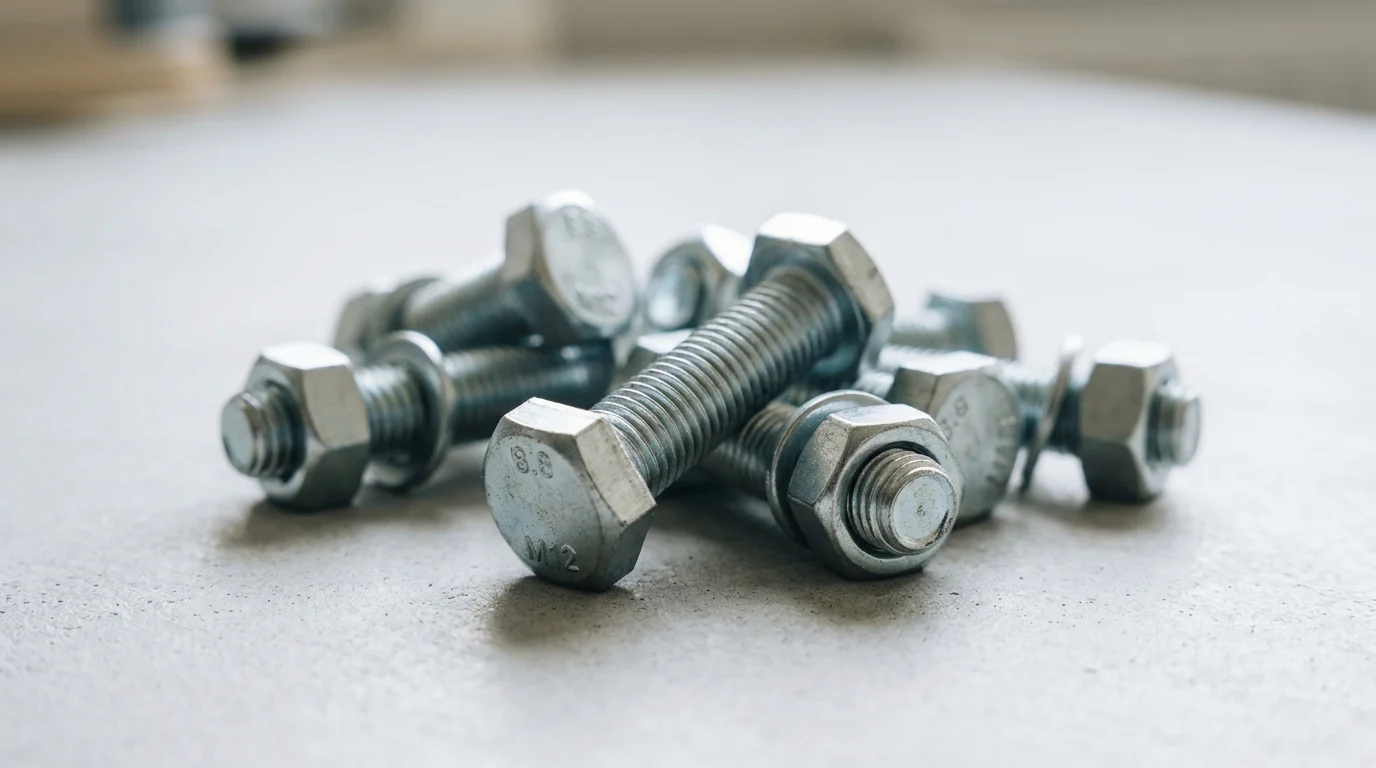
A hex bolt may look like a small commodity part, but in bridges, machinery, vehicles, and industrial frames, its condition can determine whether a joint stays secure or fails under load. The real lifespan of these fasteners is not a single fixed number; it changes with material grade, coating, torque accuracy, vibration, moisture, chemicals, and temperature cycles. In ideal indoor conditions, some bolts can remain serviceable for decades, while harsh outdoor or high-vibration settings can shorten that window dramatically. This guide explains the practical factors that control hex bolt service life, how to recognize early failure risks, and how smarter specification and maintenance reduce safety, downtime, and replacement costs.
Why Hex Bolt Service Life Matters
In industrial engineering and heavy construction, fasteners are critical components holding infrastructure together. Among these, the hex bolt stands out as a universally relied-upon component designed to handle immense shear and tensile forces. However, treating these fasteners as permanent, install-and-forget hardware is a dangerous misconception. Understanding exactly how long these components are engineered to last is fundamental to maintaining structural integrity, optimizing maintenance budgets, and preventing mechanical failures.
The service life of a fastener is not a fixed number but rather a dynamic variable dictated by its operating environment, material composition, and the physical stresses it endures daily. When engineers specify components for a bridge, a manufacturing assembly line, or a heavy-duty vehicle, they must calculate the expected lifespan of every joint. A failure to accurately project this lifespan inevitably leads to premature degradation, compromising the safety and operational efficiency of the entire system.
Typical Hex Bolt Lifespan
Under ideal, climate-controlled indoor conditions with static loads, a standard carbon steel fastener can achieve a lifespan of 30 to 50+ years. In such benign environments, the metal experiences negligible oxidative stress, and the absence of impact loading means the microstructure of the steel remains undisturbed. However, this ideal lifespan assumes static conditions and ignores common real-world variables like fastener loosening, thread fatigue from thermal cycling in HVAC environments, and changing load requirements over a building's lifespan. Often, real-world replacement occurs for reasons other than actual bolt failure.
"Typical" is a highly relative term in industrial applications. When deployed in harsh, dynamic environments—such as marine infrastructure, chemical processing plants, or high-vibration heavy machinery—the baseline lifespan drastically contracts. An unlubricated, unprotected steel fastener subjected to continuous outdoor moisture and thermal cycling may fail in as little as 3 to 5 years. Consequently, engineers must shift their perspective from a theoretical maximum lifespan to a practical, environment-adjusted service life, factoring in the inevitable degradation caused by real-world service conditions.
Cost, Safety, and Downtime Risks
The consequences of overestimating fastener longevity extend far beyond the negligible replacement cost of the hardware itself. The primary risk lies in unscheduled operational downtime. In high-volume manufacturing facilities, a single sheared bolt on a critical conveyor system can halt production lines, resulting in downtime costs that vary by industry but frequently result in severe financial losses per hour. The financial impact of a minor hardware failure thus scales exponentially when service life is miscalculated.
Safety risks present an even more severe liability. In structural applications like scaffolding, crane assemblies, or pressure vessels, the mechanical failure of load-bearing Hex Bolts can lead to structural collapses, severe injuries, and regulatory penalties. Furthermore, as fasteners degrade, they can cause micro-shifts in structural alignment, leading to accelerated wear on adjacent, far more expensive machinery components. Proactive lifecycle management mitigates these cascading failures, transforming fastener maintenance from a reactive emergency into a predictable, budgeted operational expense.
Key Factors That Affect Hex Bolt Lifespan
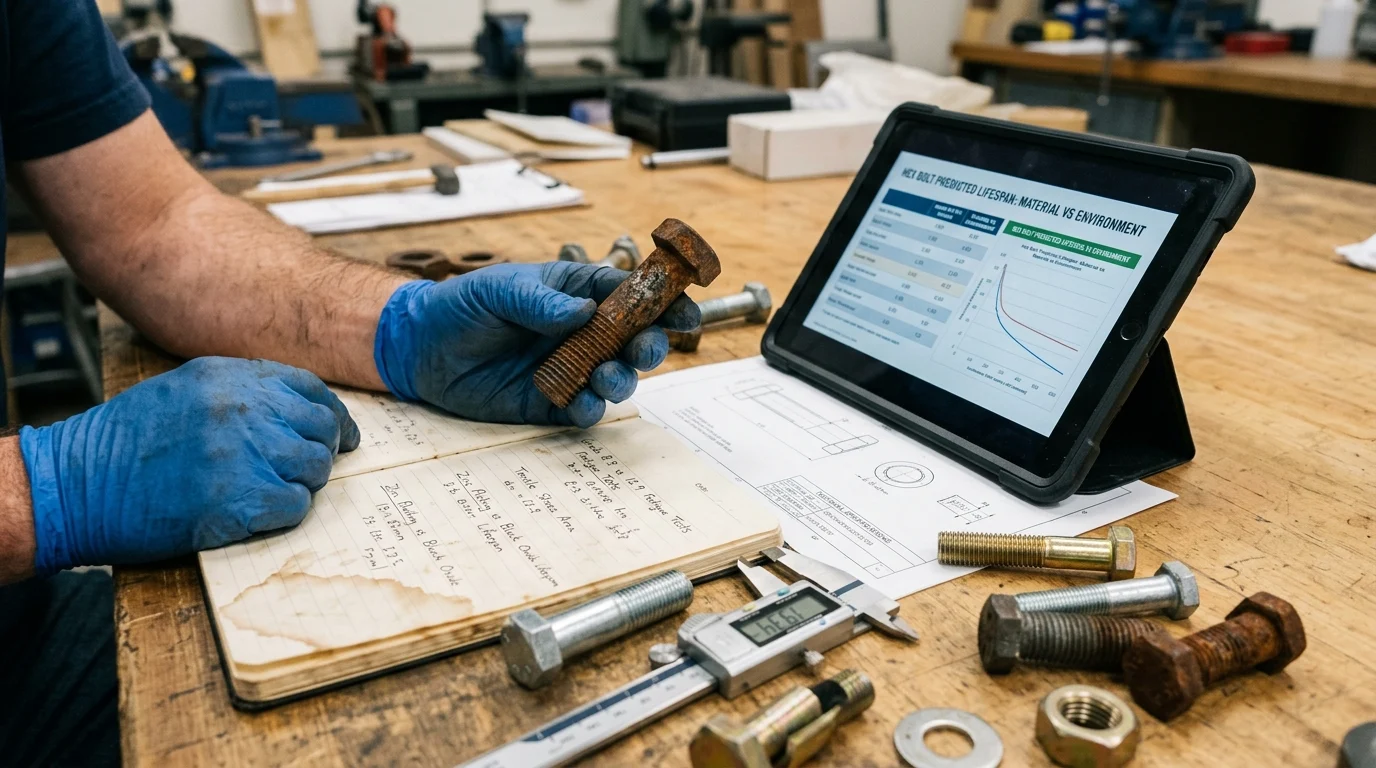
The longevity of a threaded fastener is rarely dictated by a single variable. Instead, it is the product of an intricate interplay between the metallurgical properties of the hardware, the environmental conditions of the installation site, and the precision of the installation process itself. Isolating and controlling these factors is the core of effective joint engineering.
Material Grade and Tensile Strength
The foundational determinant of a fastener's service life is its material grade, which dictates its tensile and yield strength. Tensile strength refers to the maximum stress the hardware can withstand before fracturing, while yield strength indicates the point at which it permanently deforms. For example, a standard SAE Grade 2 bolt offers a minimum tensile strength of 74,000 psi, making it suitable for low-stress, non-critical applications.
In contrast, high-stress applications require hardened materials like SAE Grade 8 or Metric Class 10.9. A Grade 8 fastener is heat-treated to achieve a minimum tensile strength of 150,000 psi. This superior strength allows the hardware to absorb immense operational loads without stretching. However, higher tensile strength often comes at the cost of ductility, making extremely hard bolts more susceptible to sudden hydrogen embrittlement failures if exposed to certain corrosive environments or improper electroplating processes.
Corrosion, Vibration, and Fatigue
Environmental degradation is the most common enemy of fastener longevity. Corrosion attacks the microstructure, slowly reducing the cross-sectional area of the hardware and stripping away its load-bearing capacity. Galvanic corrosion is particularly destructive; it occurs when two dissimilar metals (e.g., a carbon steel fastener and an aluminum housing) are in contact in the presence of an electrolyte like saltwater, rapidly accelerating the deterioration of the less noble metal.
Simultaneously, kinetic forces such as continuous vibration and cyclical loading drastically shorten service life through mechanical fatigue. In heavy machinery, high-frequency vibrations (e.g., 50 to 60 Hz generated by industrial motors) can cause a fastener to self-loosen over time. As the clamping force drops, the hardware experiences microscopic transverse movements. This cyclical stress initiates micro-cracks at the root of the threads, eventually propagating through the shaft and resulting in a sudden, brittle fatigue failure long before the anticipated end of the hardware's life.
Installation Quality and Torque Control
Even the highest-grade hardware will suffer a drastically reduced lifespan if installed incorrectly. Torque control is the single most critical factor during installation. The goal of tightening a fastener is to stretch it elastically, creating a precise clamping force (preload) that holds the joint together. Industry standards generally dictate that a fastener should be torqued to approximately 75% to 90% of its yield strength.
Over-torquing pushes the metal past its elastic limit into plastic deformation. Once yielded, the hardware permanently loses its spring-like tension, drastically reducing its fatigue resistance and leaving it vulnerable to immediate failure under additional loads. Conversely, under-torquing fails to generate sufficient preload, allowing the joint components to separate and shift under operational stress. This shifting subjects the fastener to severe shear forces it was not designed to handle, reducing a multi-decade lifespan to mere months of service.
Hex Bolt Lifespan by Material and Coating
Because environmental exposure is unavoidable in most industrial applications, selecting the appropriate base material and protective coating is the most effective strategy for extending service life. The metallurgical barrier between the raw steel and the atmosphere dictates whether the hardware will survive for a single season or for decades.
Plain Steel, Zinc-Plated, and Galvanized Bolts
Plain carbon steel fasteners offer zero inherent protection against oxidation. In environments with high relative humidity (above 60%), plain steel will begin developing red iron oxide (rust) within a matter of days or weeks, eventually compromising the thread geometry. To combat this, zinc electroplating is the most common and cost-effective surface treatment. This process deposits a thin layer of zinc—typically 5 to 15 microns thick—acting as a sacrificial anode that corrodes before the underlying steel.
Zinc-plated hardware is excellent for indoor or enclosed applications, comfortably lasting 10 to 15 years. However, for outdoor or heavy industrial use, hot-dip galvanization (HDG) is required. The HDG process submerses the hardware in molten zinc, creating a robust, metallurgically bonded coating between 50 and 100 microns thick. This heavy-duty barrier significantly extends outdoor service life, allowing the hardware to perform reliably for 25 to 50 years even in harsh, exposed weather conditions.
Stainless Steel and High-Strength Bolts
When surface coatings are insufficient, engineers turn to intrinsically corrosion-resistant alloys, most notably stainless steel. The most common grades, 304 and 316, utilize high chromium content (usually around 18%) to form an invisible, self-repairing chromium oxide layer on the surface. This passivation layer prevents the underlying iron from oxidizing.
Grade 304 is highly durable for general outdoor use, but Grade 316 is the standard for marine and chemical applications. Grade 316 contains 2% to 3% molybdenum, which provides exceptional resistance to chloride-induced pitting and crevice corrosion. In highly corrosive saltwater environments where galvanized steel might fail in a decade, a properly specified 316 stainless steel fastener can easily exceed a 50-year service life. For extreme high-strength requirements, specialty alloys like Inconel or titanium are utilized, though their exorbitant costs restrict them to aerospace and niche energy applications.
Comparison Table: Expected Service Life
The table below illustrates the projected service life of various material and coating combinations, assuming proper installation and maintenance. These figures serve as a baseline for engineering lifecycle calculations.
| Material / Coating | Operating Environment | Expected Service Life | Primary Failure Mode |
|---|---|---|---|
| Plain Carbon Steel | Dry, Indoor | 30 to 50+ Years | Fatigue, Thread Wear |
| Plain Carbon Steel | Outdoor, High Humidity | 1 to 3 Years | Severe Red Rust |
| Zinc-Plated (Electro) | Indoor, Moderate Humidity | 10 to 15 Years | White Rust, then Red Rust |
| Hot-Dip Galvanized | Outdoor, Exposed | 25 to 50 Years | Gradual Zinc Depletion |
| 316 Stainless Steel | Marine, High Chloride | 50+ Years | Galling, Crevice Corrosion |
How to Extend Hex Bolt Service Life
Specifying the right hardware is only the first step in lifecycle management. Maximizing the return on investment and ensuring long-term structural safety requires a rigorous, proactive maintenance protocol. Neglected joints degrade exponentially faster than those subjected to regular inspection and servicing.
Inspection for Corrosion and Thread Damage
Routine visual and physical inspections are the frontline defense against premature failure. In critical applications, joints should be inspected every 6 to 12 months. Inspectors must look for early signs of oxidation, specifically distinguishing between "white rust" (the expected, sacrificial oxidation of a zinc coating) and "red rust" (the active degradation of the structural steel). As a general industry threshold, if red rust covers more than 10% of the fastener's surface area, its structural integrity is actively being compromised.
Thread damage is another critical inspection point. During maintenance cycles that require disassembly, threads must be checked for galling—a form of adhesive wear common in stainless steel and aluminum where material is torn from one surface and welded to the other. Even microscopic thread deformation can drastically alter the friction coefficient during reassembly, making it impossible to achieve accurate torque and preload values.
Lubrication, Retorquing, and Replacement Intervals
Proper lubrication is vital for extending the lifespan of threaded joints, particularly those subjected to frequent maintenance. Applying anti-seize compounds (such as copper, nickel, or graphite-based pastes) prevents galling and protects the thread matrix from moisture intrusion. However, engineers must strictly account for lubrication when calculating torque; a lubricated thread has a significantly lower friction coefficient, meaning applying dry-torque specifications to a lubricated fastener will inevitably result in severe over-torquing and yielding.
Furthermore, dynamic loads cause joint relaxation over time. Gaskets compress, surface irregularities flatten, and thermal cycling causes micro-expansions. To combat this loss of preload, a strict retorquing schedule must be implemented. Best practices dictate that critical joints should be checked and retorqued after the first 100 hours of initial operation, and subsequently on an annual basis to ensure the clamping force remains within the engineered tolerances.
Repair or Replace Decision Process
Maintenance teams must operate under a clearly defined protocol for determining when hardware should be discarded rather than reused. While replacement is the safest default in high-stakes environments, bolt reuse is acceptable under specific, controlled conditions. If a fastener passes visual inspection, shows no signs of thread galling, remains below a 5% cross-sectional loss threshold from corrosion, and has never been torqued past its yield point, it may be safely reassembled.
However, if a fastener exceeds the 5% corrosion threshold, it must be retired immediately. Additionally, any hardware that has been subjected to extreme stress events—such as a machine crash, a severe seismic event, or known over-torquing during installation—should be replaced regardless of its visual appearance. The internal microstructure may have suffered plastic deformation or micro-fracturing that is invisible to the naked eye. Reusing yielded hardware guarantees a drastically shortened secondary lifespan and invites failure.
How to Choose Long-Lasting Hex Bolts
Procuring hardware that reliably meets expected service life projections requires strict adherence to engineering standards and a deep understanding of application-specific demands. The marketplace is flooded with substandard, counterfeit, or improperly graded hardware that can compromise an entire project. Sourcing must be treated as a rigorous technical discipline.
Standards, Specifications, and Certifications
Long-lasting hardware begins with verifiable compliance to international standards. Organizations such as ASTM International, ISO, and SAE define the precise metallurgical compositions, heat treatments, and dimensional tolerances required for different classes of hardware. For structural applications, specifying ASTM A325 or A490, or metric ISO 898-1 Class 10.9, ensures the hardware is engineered for heavy, dynamic loads.
Buyers must demand full material test reports (MTRs) and lot traceability from manufacturers. Reputable suppliers implement strict quality control measures, such as magnetic particle inspection and ultrasonic testing, to identify internal voids or micro-cracks before the hardware leaves the facility. In high-tier automotive and aerospace supply chains, acceptable defect rates are pushed below 50 Parts Per Million (PPM). Without these certifications, buyers risk utilizing hardware with inconsistent tensile strengths, leading to unpredictable failure rates in the field.
Matching Bolt Type to Application Conditions
The most durable fastener in the world will fail prematurely if placed in the wrong environment. Matching the specific hardware type to the operational conditions is critical. For instance, in offshore oil rigs or chemical processing plants subjected to highly acidic environments, standard zinc plating is vastly inadequate. Engineers must specify Hex Bolts coated with advanced fluoropolymers like PTFE (Teflon) or Xylan, which provide exceptional chemical resistance and lower the friction coefficient for precise torque application.
Similarly, applications involving extreme temperature fluctuations require specific alloy choices. Standard carbon steel becomes dangerously brittle at sub-zero temperatures and loses significant tensile strength above 400°C (750°F). In these scenarios, alloys such as A193 Grade B7 (for high temperatures) or L7 (for low temperatures) must be specified to ensure the hardware maintains its mechanical properties and projected lifespan under thermal stress.
Final Selection Checklist
To systematize the procurement process and guarantee maximum service life, engineering and purchasing teams should utilize a strict selection matrix. This ensures that every variable—from tensile load to environmental exposure—is accounted for, and separates design specifications from post-installation validation testing.
| Application Condition | Design Specification | Validation Testing Metric |
|---|---|---|
| High Vibration | Fine Thread + Locking Fluid | Preload retention > 80% after 1M cycles |
| High Tensile Stress | Grade 8 / Class 10.9 | Proof load and tensile testing verification |
| Saltwater Exposure | 316 Stainless or PTFE Coating | > 1,000 hours salt spray resistance |
| Frequent Disassembly | Anti-Seize + Hardened Washers | Galling threshold < 5% thread damage |
Key Takeaways
- A carbon steel hex bolt can last 30 to 50+ years in dry, climate-controlled, static conditions, but only when loads and installation remain stable.
- Unprotected steel fasteners exposed to moisture, thermal cycling, and outdoor conditions may fail in as little as 3 to 5 years.
- Choose bolt material, grade, coating, and lubrication based on the actual environment rather than assuming a universal service life.
- Inspect high-risk joints regularly for corrosion, loosening, thread damage, deformation, and fatigue before they cause downtime or structural failure.
- Proactive replacement planning is usually cheaper than emergency repairs because a single failed bolt can stop equipment or damage adjacent components.
Frequently Asked Questions
What is the typical service life of a hex bolt?
In clean, dry, static indoor conditions, a carbon steel hex bolt may last 30 to 50+ years. In outdoor, wet, vibrating, or corrosive environments, service life can drop to 3 to 5 years without proper material selection, coating, lubrication, and inspection.
Why do hex bolts fail before their expected lifespan?
Premature failure usually comes from corrosion, fatigue, vibration loosening, overloading, improper torque, thermal cycling, or using the wrong grade or coating for the environment. Installation quality is often as important as the bolt material.
How often should hex bolts be inspected?
Inspection frequency depends on risk. Static indoor joints may need periodic scheduled checks, while high-vibration, marine, chemical, or load-bearing structural applications should be inspected much more frequently as part of a preventive maintenance program.
Do stainless steel hex bolts last longer than carbon steel bolts?
Often, yes, especially in wet or corrosive environments. Stainless steel resists rust better than plain carbon steel, but it may not always match the strength of high-grade alloy fasteners, so both corrosion resistance and load requirements must be considered.
Can coatings extend the life of hex bolts?
Yes. Zinc plating, hot-dip galvanizing, and other protective coatings slow corrosion and can significantly extend service life. The best coating depends on exposure to moisture, chemicals, temperature, abrasion, and whether the bolt will be used indoors or outdoors.