

 Send Email
Selecting the right threaded rod stud bolts is critical for ensuring structural integrity, preventing equipment failure, and maintaining safety in industrial applications. Threaded rods, also known as stud bolts or full-threaded rods, are essential fasteners used in construction, manufacturing, and machinery assembly. The selection process requires understanding material properties, thread specifications, load requirements, and environmental conditions. This comprehensive guide covers all factors to consider when choosing threaded rod stud bolts for your specific application needs.

Understanding Threaded Rod Stud Bolts: Basic Definitions
A threaded rod stud bolt is a fastener with threads running along its entire length. Unlike conventional bolts that have a head on one end, threaded rods are fully threaded and typically require nuts on both ends for secure fastening. These fasteners come in various materials including carbon steel, alloy steel, and stainless steel, each offering different strength and corrosion resistance properties. Threaded rods serve as anchor bolts, hangers, and tension rods in structural applications. Our China threaded metal studs and rods manufacturer produces standard and custom threaded rods meeting international specifications.
The terminology around threaded rods can be confusing. The terms "stud bolt" and "threaded rod" are often used interchangeably, though stud bolts sometimes refer to partially threaded fasteners. In piping applications, the term "stud bolt" typically describes double-end studs with threads on both ends. Understanding these distinctions helps when communicating with suppliers and specifying requirements in technical documents. For precision fastening applications, consider exploring hexagon socket head cap screws according to DIN 912 standards for high-strength connections.
Thread Specifications: UNC, UNF, and Metric Threads
Thread type selection is fundamental when choosing threaded rod stud bolts. Two primary systems exist: Unified Thread Standard (UNC/UNF) used primarily in North America, and Metric threads used internationally. UNC (Unified Coarse) threads have larger pitch and are ideal for general fastening in materials like cast iron and soft metals. UNF (Unified Fine) threads offer better resistance to vibration and are suitable for precision applications.
Metric threads follow ISO standards and are designated by diameter and pitch in millimeters. Common metric sizes range from M6 to M48 and beyond. The hexagon head bolts with coarse thread UNC UNF product page provides detailed specifications for thread types and strength grades. When selecting thread specifications, consider the mating components and whether coarse or fine threads better suit your application requirements.
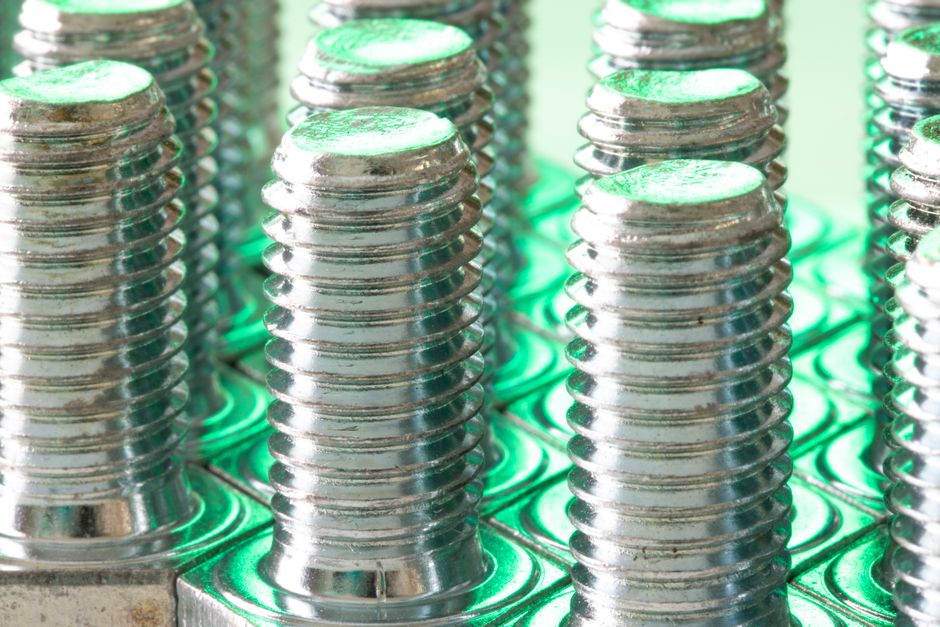
Material Selection: Strength Grades and Corrosion Resistance
Material choice directly impacts the mechanical properties and service life of threaded rod stud bolts. Carbon steel threaded rods offer good strength at economical prices but require protective coatings for corrosive environments. Alloy steel options like ASTM A193 B7 provide superior tensile strength and are heat-treated for enhanced performance in high-temperature applications. Stainless steel threaded rods, available in grades 304 and 316, offer excellent corrosion resistance for outdoor and marine environments.
Strength grades are standardized to indicate load-bearing capacity. For high-strength hex bolts and threaded products, common grades include 8.8, 10.9, and 12.9 for metric specifications, and ASTM A193 B7 for high-temperature service. The ISO 69487 standard for steel fastener materials provides guidelines for heat treatment processes, ensuring consistent quality across manufacturers.
Temperature conditions significantly influence material selection. Standard carbon steel loses strength at elevated temperatures, while alloy steels like B7 maintain properties up to approximately 500°C. For cryogenic applications, specific stainless steel grades remain ductile at extremely low temperatures. Always verify material compatibility with your operating temperature range before final selection.
Dimensional Requirements: Diameter, Length, and Thread Pitch
Proper dimensional selection ensures mechanical compatibility and load distribution. Threaded rod diameter should correspond to calculated load requirements and the hole or clearance where it will be installed. Common diameters range from 6mm (M6) for light-duty applications to 48mm (M48) and larger for heavy structural connections. The thread pitch must match the mating components, whether nuts, threaded holes, or other fasteners.
Length selection depends on the total grip distance plus engagement length for nuts. When specifying hex bolts and threaded rods, account for the thickness of washers, the depth of threaded engagement, and any spacing requirements. Oversized lengths can be trimmed, but undersized rods cannot be extended, making accurate measurement essential.
| Thread Size | Coarse Pitch (mm) | Fine Pitch (mm) | Typical Application |
|---|---|---|---|
| M10 | 1.5 | 1.25 | General machinery, automotive |
| M12 | 1.75 | 1.25 / 1.5 | Structural connections |
| M16 | 2.0 | 1.5 | Heavy equipment, construction |
| M20 | 2.5 | 1.5 / 2.0 | Steel structures, towers |
| M24 | 3.0 | 2.0 | Bridges, large machinery |
Surface Finish and Protective Coatings
Surface finish affects corrosion resistance, appearance, and thread lubrication. Plain or black oxide finishes provide minimal protection and are suitable for indoor, low-humidity environments. Zinc plating offers good corrosion resistance for indoor and covered outdoor applications at economical cost. Hot-dip galvanizing provides superior protection for extended outdoor exposure, though the coating adds thickness that may affect thread fit.
Specialized coatings address specific requirements. Mechanical galvanizing offers even coating thickness for consistent thread engagement. Dacromet provides salt spray resistance exceeding 1000 hours. For food processing or medical applications, electropolishing creates a clean, passive surface meeting sanitary standards. When selecting finishes, consider compatibility with washers and hardware in your assembly to prevent galvanic corrosion between dissimilar metals.
Environmental Considerations and Application Matching
Operating environment determines material and coating requirements for threaded rod stud bolts. Indoor environments with controlled humidity allow economical carbon steel options with basic finishes. Outdoor exposure demands galvanized, stainless steel, or coated alternatives to prevent rust and maintain structural integrity. Chemical processing plants require specialized materials resistant to specific substances, such as 316 stainless steel for chloride environments.
Dynamic loading conditions require careful consideration of fatigue strength. Threaded rods in vibrating equipment should use fine thread specifications for improved resistance to loosening. For seismic applications, special locking features or adhesive threadlockers help maintain preload under intermittent loads. Always apply appropriate hex nuts and hardware rated for the same strength grade as your threaded rods to ensure balanced load distribution.
Industry Standards and Quality Certifications
Threaded rod stud bolts must comply with applicable industry standards to ensure reliability and interchangeability. ASTM standards govern materials, mechanical properties, and testing requirements in the United States. ISO standards provide international specifications for metric fasteners. EN standards apply within the European Union. Understanding these standards helps when specifying requirements and verifying supplier certifications.
Quality management systems ensure consistent manufacturing processes. Look for suppliers demonstrating compliance with international quality standards and providing traceability documentation for materials and heat treatments. Third-party testing and certification provide independent verification of mechanical properties and dimensional accuracy, essential for critical applications in aerospace, pressure vessels, or structural connections.
Installation Best Practices
Proper installation ensures threaded rod stud bolts perform as designed. Pre-installation inspection should verify thread condition, confirm dimensions match specifications, and check for visible defects. Clean threads before assembly to remove debris, mill scale, or protective oils that could affect torque-tension relationships. Use appropriate washers to distribute loads and protect surfaces.
Torque control maintains consistent preload across multiple fasteners. Use calibrated torque wrenches and follow developed documented procedures for critical joints. When thread engagement is limited, consider alternative preload methods like turn-of-nut or hydraulic tensioning. Anti-seize compounds may be appropriate for high-temperature applications but require adjustment to torque specifications due to lubricating effects.
Common Selection Mistakes to Avoid
Several common errors lead to premature failure or performance issues. Underestimating load requirements results in overstressed fasteners prone to fatigue or yield. Selecting incompatible thread pitches causes assembly problems and potential cross-threading damage. Ignoring environmental factors leads to corrosion, hydrogen embrittlement, or material degradation.
Additional mistakes include using mismatched strength grades in assemblies, inadequate thread engagement length, and improper storage causing surface degradation before installation. Review specifications thoroughly, verify material certifications, and consult with fastener specialists for critical or non-standard applications. Prevention through careful selection costs far less than field failures.
Summary: Key Selection Criteria Checklist
When selecting threaded rod stud bolts, systematically evaluate these factors:
- Determine required tensile strength based on load calculations
- Match material and grade to environmental conditions
- Verify thread specifications match mating components
- Calculate appropriate diameter and length dimensions
- Select surface finish compatible with operating environment
- Ensure compliance with applicable industry standards
- Plan proper installation and preload method
Following this structured approach ensures you select the right threaded rod stud bolts for your application, balancing performance requirements with cost considerations. For detailed specifications and custom requirements, consult with experienced fastener manufacturers who can provide technical support and quality documentation.
Frequently Asked Questions
What is the difference between a threaded rod and a stud bolt?
Threaded rods have threads along their entire length and typically use nuts on both ends. Stud bolts traditionally have threads on both ends with a plain shank in the middle, commonly used in piping applications. In practice, the terms are often used interchangeably for fully threaded products.
How do I determine the correct length of threaded rod needed?
Measure the total distance between mounting surfaces (grip length), add the depth of thread engagement in nuts or threaded holes (typically equal to the diameter), and include washer thickness. Round up to the next standard length available.
What strength grade should I select for my application?
Match the strength grade to calculated load requirements with appropriate safety factors. General applications use grade 8.8 or equivalent. High-strength requirements use grade 10.9 or 12.9. For elevated temperatures, ASTM A193 B7 is appropriate.
Can threaded rods be cut to length?
Yes, threaded rods can be cut to custom lengths using hacksaws, angle grinders, or band saws. After cutting, re-threading may be necessary if the cut damages thread roots. Consider ordering pre-cut lengths from suppliers for critical applications.
How do I prevent threaded rod from loosening in vibrating environments?
Use fine thread specifications for better vibration resistance, apply thread-locking adhesives, use locking nuts, or employ Belleville washers for spring tension. Proper preload control through calibrated torque methods also helps maintain secure connections.