

 Send Email

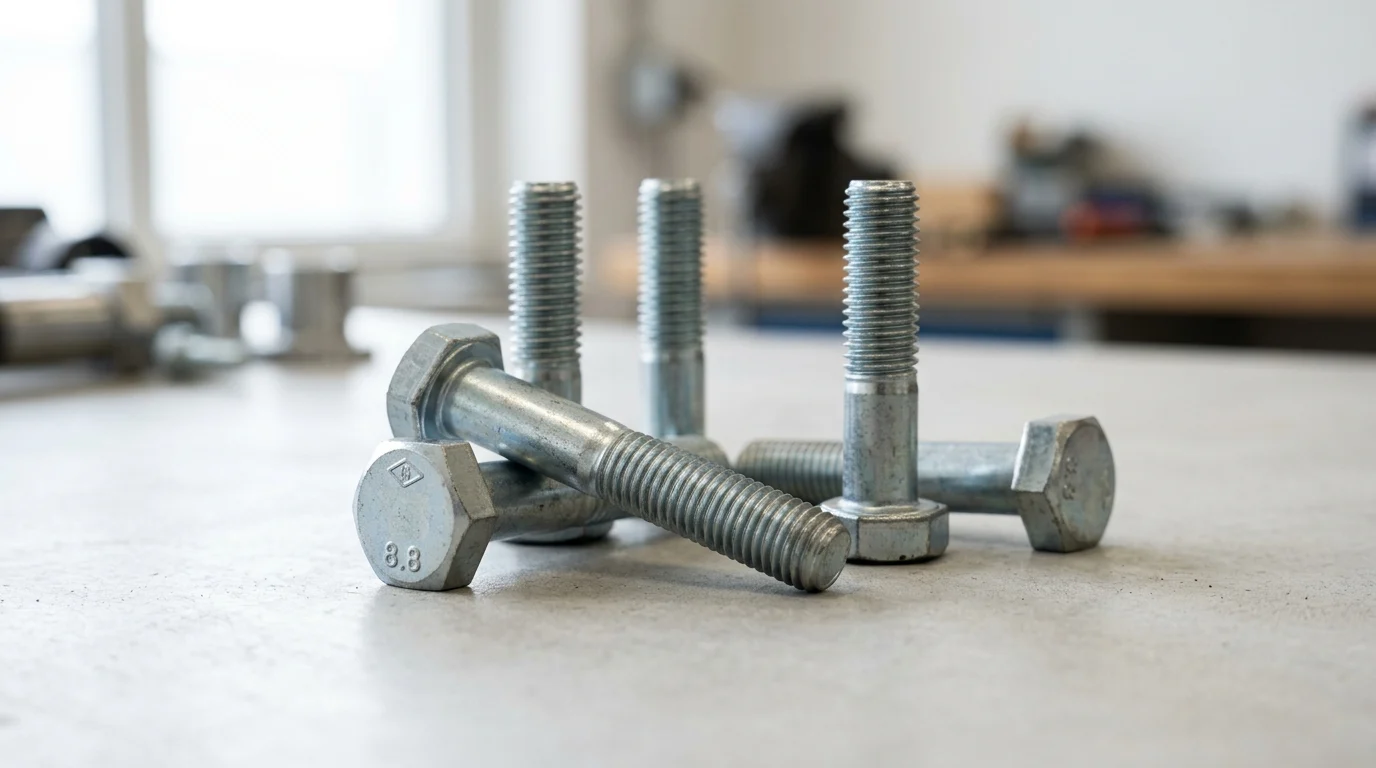
A bolted joint may look simple, but in heavy industry its performance depends on metallurgy, geometry, preload, and controlled deformation. High-tensile hex bolts are engineered to stretch like stiff springs, generating the clamping force that keeps steel frames, wind turbine flanges, mining equipment, and other critical assemblies secure under extreme loads. With common strength thresholds starting around 800 MPa and specialized grades reaching far beyond that, choosing the right fastener is not just a purchasing decision—it is a risk-control measure. This article explains how these bolts work, why material science matters, and where high-strength specifications become essential for safety and reliability.
Why High-Tensile Hex Bolts Matter in Critical Assemblies
In the engineering and manufacturing sectors, the integrity of a complex assembly relies fundamentally on the fasteners holding it together. Standard fasteners may suffice for low-stress environments, but critical industrial applications demand components capable of withstanding immense shear, tension, and vibrational forces. When mechanical failure carries the risk of severe downtime, financial loss, or safety hazards, engineers specify high-tensile fasteners to ensure operational reliability.
The physics of bolted joints dictates that fasteners must stretch slightly to act like a stiff spring, creating the clamping force necessary to hold two or more materials together. Achieving this under extreme loads requires specific metallurgical properties and precise manufacturing techniques. Understanding the science behind these components is crucial for procurement specialists, structural engineers, and quality assurance professionals tasked with designing and maintaining resilient infrastructure.
Defining High-Tensile Hex Bolts
The term "high-tensile" is often used as a general industry descriptor rather than a single, universal standard. It refers to fasteners manufactured to meet strict minimum strength thresholds, typically utilizing medium-carbon or alloy steels subjected to rigorous heat treatment. In general engineering practice, a bolt is frequently classified as high-tensile if its minimum tensile strength exceeds 800 megapascals (MPa), equivalent to roughly 116,000 pounds per square inch (psi). While this 800 MPa baseline (corresponding to Metric Class 8.8 or SAE Grade 5) is a common benchmark, specific systems—such as ASTM A325/A490, A193 B7, or Class 12.9—have their own distinct thresholds and metallurgical requirements.
High-tensile hex-bolts are distinguished by their hexagonal heads, which allow for high torque application using standard wrenches or pneumatic tools. Unlike standard low-carbon hardware, high-tensile variants must exhibit a delicate balance of hardness and ductility. If a bolt is too hard, it becomes brittle and susceptible to sudden failure under impact loads; if it is too soft, it will yield and permanently stretch, compromising the joint's clamping force.
Where High-Strength Bolts Add Value
High-strength bolts are indispensable in sectors where structural loads are continuously high or subject to dynamic fluctuations. In wind turbine construction, for example, the tower flange connections and blade roots rely on massive Class 10.9 bolts, each requiring a precise pre-tensioning force often exceeding 500 kilonewtons (kN) to resist the extreme bending moments generated by wind shear.
Similarly, in heavy earth-moving equipment and mining machinery, fasteners must endure constant shock loading and vibration. Here, the high yield strength of these bolts prevents joint separation and fatigue failure. In civil engineering, structural steel frames for skyscrapers and bridges utilize high-tensile bolts in slip-critical connections, where the friction between the connected plates—induced by the immense clamping force of the bolt—transfers the load rather than the bolt's shear strength alone. This reliance on clamping force underscores why exceeding standard strength thresholds is non-negotiable in heavy industry.
Material Science Behind High-Tensile Hex Bolts

The transition from raw steel wire to a high-tensile fastener is a triumph of modern metallurgy. Producing a bolt capable of bearing extreme mechanical loads requires precise control over chemical composition, thermal processing, and surface engineering. Each stage in the manufacturing lifecycle is meticulously calibrated to optimize the internal grain structure of the steel and protect the finished product from environmental degradation.
Alloy Selection and Carbon Content
The foundation of any high-tensile fastener is its base material. Standard low-carbon steels (containing less than 0.25% carbon) cannot be hardened sufficiently through heat treatment to achieve high-tensile status. Instead, manufacturers utilize medium-carbon steels (ranging from 0.30% to 0.50% carbon), such as AISI 1045, or medium-carbon alloy steels, such as AISI 4140 or 4340.
Alloying elements are added in precise concentrations to enhance specific mechanical properties. Chromium (typically 0.80% to 1.10% in 4140 steel) increases hardness and wear resistance, while molybdenum (0.15% to 0.25%) improves high-temperature strength and hardenability. Manganese acts as a deoxidizer and further increases strength. The strict control of these elemental ratios ensures that the steel will respond predictably to subsequent thermal processing, guaranteeing uniformity across production batches consisting of tens of thousands of units.
Heat Treatment, Quenching, Tempering, and Thread Rolling
To transform the alloy into a high-strength component, the bolts undergo a multi-stage heat treatment process. First, the fasteners are heated in an austenitizing furnace. While temperatures vary by specific material and grade, they generally fall between 850°C and 900°C (1,560°F to 1,650°F). Once the steel's crystalline structure transforms into austenite, the bolts are rapidly quenched in specialized oil or polymer baths. This rapid cooling locks the carbon atoms within the iron matrix, forming a highly stressed, extremely hard, but brittle micro-structure known as martensite.
To restore the necessary ductility and prevent brittle fracture in the field, the quenched bolts are then tempered. They are reheated to a lower temperature range—typically between 400°C and 600°C (750°F to 1,110°F), depending on the target grade—and held there for a specific duration. This relieves internal stresses, slightly reducing peak hardness but drastically improving toughness. Furthermore, the timing of thread creation is critical. Threads can be rolled into the blank either before or after heat treatment. While thread rolling after heat treatment compresses the grain flow at the thread roots and can increase fatigue life by up to 30%, it is not universal due to higher tooling costs and geometry constraints; thus, many fasteners are rolled prior to heat treatment for economy.
Coatings, Plating, and Corrosion Resistance
Because high-tensile steels are inherently vulnerable to oxidation, surface protection is a critical aspect of their material science. The choice of coating must balance corrosion resistance, dimensional tolerances, and the friction coefficient of the threads. Electroplated zinc is common for mild environments, typically applied in thicknesses of 5 to 12 microns, though it offers limited protection against severe weathering. Crucially, applying zinc plating to high-strength fasteners (especially those above ~39 HRC, such as Class 10.9 and 12.9) introduces a severe risk of hydrogen embrittlement during the acid pickling and plating process. To mitigate this, these bolts must undergo immediate post-baking to diffuse trapped hydrogen.
For harsh environments, such as marine or chemical processing facilities, hot-dip galvanizing (HDG) is preferred. HDG applies a robust zinc layer averaging 45 to 55 microns thick, though it often requires the nuts to be tapped oversize to accommodate the thicker coating. Alternatively, modern zinc-nickel alloy plating provides exceptional protection, routinely withstanding over 1,000 hours in standard salt spray testing (ASTM B117) without showing red rust, while maintaining a thin profile of just 8 to 15 microns. In highly specialized applications, PTFE (Teflon) or ceramic-metallic coatings (like Geomet or Dacromet) are utilized to provide both corrosion resistance and precise control over installation friction.
Standards and Grades for High-Tensile Hex Bolts
Global engineering supply chains rely on standardized classification systems to ensure that a bolt manufactured in one region performs identically to a bolt produced in another. These standards define the mechanical properties, dimensional tolerances, and testing protocols required for high-tensile hardware. The two most prominent systems governing these specifications are the Society of Automotive Engineers (SAE) standard for imperial (inch) fasteners and the International Organization for Standardization (ISO) for metric fasteners.
Comparing SAE Grade 5, SAE Grade 8, and Metric
Classes
The SAE J429 standard governs inch-series bolts, with Grade 5 and Grade 8 being the most common high-tensile classifications. Grade 5 bolts, made from medium-carbon steel, are recognizable by three radial lines on the bolt head. Grade 8 bolts, manufactured from medium-carbon alloy steel, feature six radial lines and offer superior strength. In the metric system (ISO 898-1), strength is denoted by a property class stamped on the head, such as 8.8 or 10.9.
| Specification System | Grade / Class | Min. Tensile Strength | Min. Yield Strength | Core Material |
|---|---|---|---|---|
| SAE Imperial | Grade 5 | 120,000 psi | 92,000 psi | Medium Carbon Steel |
| SAE Imperial | Grade 8 | 150,000 psi | 130,000 psi | Medium Carbon Alloy Steel |
| ISO Metric | Class 8.8 | 800 MPa | 640 MPa | Medium Carbon Steel |
| ISO Metric | Class 10.9 | 1,040 MPa | 940 MPa | Medium Carbon Alloy Steel |
This standardization allows engineers to cross-reference specifications when designing equipment for different global markets. For instance, while a Class 8.8 bolt is not a perfect equivalent to a Grade 5 bolt, their mechanical properties are similar enough that they occupy the same tier in structural design paradigms.
Strength Class, Proof Load, and Tensile Strength
When specifying high-tensile fasteners, engineers evaluate three primary mechanical thresholds: tensile strength, yield strength, and proof load. Tensile strength represents the absolute maximum stress a bolt can withstand before fracturing. Yield strength is the point at which the bolt begins to permanently deform; once a bolt exceeds its yield point, it will not return to its original length, thereby losing its clamping force.
Proof load is perhaps the most critical metric for practical joint design. It represents the maximum tension that can be applied to the bolt without any measurable permanent deformation. By definition, the proof load is typically set at 85% to 90% of the yield strength. For example, a Metric Class 10.9 bolt features a minimum tensile strength of 1,040 MPa, a yield strength of 940 MPa, and a proof load of approximately 830 MPa. Engineers generally design joints so that the operational preload utilizes 70% to 75% of the bolt's proof load, providing a safety margin against unexpected dynamic stresses.
ASTM, ISO, DIN, and EN Requirements
Beyond general mechanical properties, specific industries rely on targeted standards published by ASTM International, DIN (Deutsches Institut für Normung), and EN (European Norms). For structural steel applications, ASTM F3125 consolidates older standards like A325 and A490, mandating strict requirements for heavy hex structural bolts used in construction.
These specialized standards dictate not only the mechanical properties but also the acceptable dimensional tolerances, thread fits, and even the rotational capacity (ductility) of the fastener assembly. Compliance with these standards is rigorously audited. For example, CE marking under EN 15048 (for non-preloaded structural bolting assemblies) requires manufacturers to maintain exhaustive documentation proving that every batch meets the mandated chemical and mechanical baselines, ensuring traceability from the steel mill to the construction site.
Testing, Sourcing, and Verification
Because high-tensile hex bolts are deployed in critical applications, trusting the manufacturer’s grade stamp is insufficient without rigorous verification. Quality assurance protocols encompass a broad spectrum of testing and documentation requirements designed to identify metallurgical flaws, dimensional inaccuracies, or improper heat treatments before the fasteners enter the supply chain. Strategic procurement involves balancing these stringent quality requirements against lead times and unit costs.
Material Certificates and Inspection Steps
The first line of defense in fastener verification is the material test report (MTR) or inspection certificate. In critical industries, procurement contracts mandate EN 10204 Type 3.1 certificates, which declare that the supplied products comply with the order requirements and include specific test results from the production batch. These documents trace the exact chemical composition of the steel heat and the mechanical test results of the finished bolts.
During incoming inspection, quality control teams utilize statistical sampling—often based on Acceptable Quality Level (AQL) standards like ISO 3269—to verify dimensional tolerances, thread pitch, and visual integrity. High-tier manufacturers leverage automated optical sorting machines to inspect 100% of the production run for thread defects or head malformations, targeting defect rates that can reach below 50 Parts Per Million (PPM) in top-tier facilities, though this varies by supplier. Additionally, magnetic particle inspection (MPI) or ultrasonic testing may be employed to detect microscopic surface cracks or internal voids that could propagate under stress.
Torque-Tension and Proof-Load Testing
Mechanical testing validates the theoretical properties of the bolts. Proof-load testing involves placing the bolt in a specialized tensile testing machine, applying the specified proof load for a set duration (typically 10 seconds), and verifying that the bolt length has not increased by more than 0.0125 mm (0.0005 inches) upon release.
Equally important is torque-tension testing, often conducted using a Skidmore-Wilhelm load cell. This test determines the relationship between the torque applied to the bolt head or nut and the actual clamping force (tension) generated in the joint. This relationship is heavily influenced by the K-factor (nut factor), which represents the friction in the threads and under the bearing surface. A plain steel bolt might have a K-factor of 0.20, meaning a significant portion of the torque is lost to friction. Applying a specialized PTFE coating or cadmium plating can lower the K-factor to 0.12 or 0.15. However, because cadmium is heavily regulated or banned in many jurisdictions under environmental directives like REACH and RoHS, modern compliant alternatives such as zinc-nickel or PTFE are increasingly recommended to achieve target tension with less applied torque.
Procurement and Supplier Trade-Offs
Sourcing high-tensile fasteners requires supply chain managers to navigate complex trade-offs between quality assurance, vendor capabilities, and availability. Off-the-shelf standard bolts are readily available through master distributors with minimal lead times. However, securing specialized high-tensile bolts requires engaging directly with manufacturers for custom production runs.
Depending on the supplier and region, custom production runs typically demand Minimum Order Quantities (MOQs) ranging from 5,000 to 10,000 pieces, influenced by the diameter and manufacturing method (cold heading versus hot forging). Lead times for these runs frequently span 6 to 12 weeks, as the manufacturer must secure the specific alloy steel wire, schedule the heat treatment furnaces, and arrange for third-party plating. Procurement teams must forecast demand accurately to avoid stockouts, as substituting an unverified or lower-grade fastener in a high-tensile application to save time is an unacceptable engineering risk.
Choosing the Right High-Tensile Hex Bolt
Specifying the correct high-tensile hex bolt requires synthesizing material science, standard classifications, and application-specific load dynamics. Engineers must look beyond the simple strength of the fastener and consider how the bolt will interact with the joint components, the operational environment, and the lifecycle of the machinery. An over-specified bolt can inflate project costs unnecessarily, while an under-specified bolt invites mechanical failure.
Matching Specifications to Load Cases
The primary step in bolt selection is analyzing the load case of the joint. Joints are broadly categorized into tension joints, where the load attempts to pull the connection apart along the axis of the bolt, and shear joints, where the load forces the connected materials to slide past one another perpendicular to the bolt.
In tension joints, the bolt's clamping force (preload) must exceed the maximum external separation force; otherwise, the joint will loosen, subjecting the bolt to severe fatigue cycles. Here, high proof loads (e.g., Class 10.9 or 12.9) are critical. In shear joints, engineers must determine if the connection is a bearing-type joint or a slip-critical joint. In slip-critical applications, the high-tensile bolt is pre-tensioned to create immense friction between the plates.
A critical safety caveat in joint design is the necessity of using nuts and washers of a matching or compatible grade; pairing a Class 10.9 bolt with a lower-grade nut compromises the entire assembly. Furthermore, mixing coated and uncoated fasteners in the same joint can lead to unpredictable friction and galvanic corrosion.
Standard vs Custom High-Strength Bolts
A recurring dilemma in mechanical design is whether to adapt an assembly to fit standard hardware or to engineer custom high-strength bolts. Standard fasteners benefit from economies of scale, extensive testing history, and immediate global availability. When a standard Class 8.8 M16 bolt fits the design parameters, utilizing it minimizes both upfront costs and long-term maintenance complexities.
Conversely, custom high-tensile bolts become necessary when space constraints dictate non-standard head dimensions, when unique thread lengths are required to keep the shear plane out of the threaded portion of the bolt, or when extreme operating temperatures demand specialized alloys like Inconel or A286 stainless steel. Customization allows for optimized performance but introduces significant engineering and budgetary hurdles. A custom CNC-machined or specially forged fastener can carry a cost premium that varies widely—often estimated at 200% to 300%—over its standard counterpart.
Balancing Strength, Cost, and Reliability
Ultimately, choosing the right fastener is an exercise in balancing total cost of ownership against operational reliability. While the unit cost of a Grade 8 bolt is higher than a Grade 5, the increased strength may allow engineers to use fewer bolts or smaller diameter fasteners, thereby reducing the overall weight and machining costs of the flange or structural plate.
| Selection Factor | Standard High-Tensile Bolts | Custom / Specialized High-Tensile Bolts |
|---|---|---|
| Initial Unit Cost | Baseline (1x) | Variable Premium (often 2.5x to 4.0x) |
| Typical Lead Time | 1 to 2 weeks (Distributor Stock) | 6 to 12 weeks (Manufactured to order) |
| Minimum Order Qty (MOQ) | 100 to 500 pieces (Box quantities) | 5,000 to 10,000 pieces (Production run) |
| Maintenance Impact | Standard tools, easy replacement | May require proprietary tools, higher inventory holding |
Furthermore, investing in premium surface treatments can drastically alter the lifecycle cost equation. For instance, spending more upfront on a zinc-nickel plated high-tensile bolt can significantly reduce long-term maintenance and replacement costs in offshore or heavy industrial environments, as the fasteners will not seize or rust prematurely.
High-Tensile Bolt Decision Checklist:
- Load Case: Determine if the joint is tension, bearing-shear, or slip-critical to establish the required proof load.
- Grade/Class: Select the appropriate standard (e.g., Grade 8, Class 10.9) and ensure nuts/washers match this grade exactly.
- Environment: Choose coatings based on exposure (e.g., Zinc-Nickel for marine, PTFE for controlled friction), avoiding banned substances like cadmium.
- Embrittlement Risk: If specifying zinc plating on high-hardness bolts (>39 HRC), mandate post-bake hydrogen embrittlement relief.
- Verification: Require EN 10204 Type 3.1 material certificates and verify K-factors if precise torque-tension relationships are critical.
By carefully analyzing these metrics—load cases, standardization, and lifecycle economics—engineers ensure that the high-tensile hex bolts they select will provide reliable structural performance for the lifespan of the assembly.
Key Takeaways
- Specify high-tensile hex bolts when joint failure could cause downtime, safety risks, or structural damage under heavy tension, shear, or vibration.
- Use 800 MPa tensile strength as a common baseline for high-tensile classification, while confirming the exact standard such as Class 8.8, ASTM A325, or A193 B7.
- Select bolts with the correct balance of hardness and ductility to avoid brittle fracture or permanent stretching under load.
- Apply controlled pre-tensioning in critical joints because the bolt must stretch slightly to create the clamping force that holds assemblies together.
- For wind turbines, bridges, mining machinery, and structural frames, choose high-strength bolts designed for dynamic loads, fatigue resistance, and slip-critical performance.
Frequently Asked Questions
What makes a hex bolt high-tensile?
A high-tensile hex bolt is typically made from medium-carbon or alloy steel and heat-treated to meet strict strength requirements, often above 800 MPa tensile strength.
Why are high-tensile hex bolts used in critical assemblies?
They provide the clamping force needed to resist heavy tension, shear, vibration, and shock loads, reducing the risk of joint loosening, fatigue, or structural failure.
Is Class 8.8 considered high-tensile?
Yes. Metric Class 8.8 is commonly treated as a high-tensile benchmark because it corresponds to a minimum tensile strength of about 800 MPa.
Why must high-strength bolts balance hardness and ductility?
Excessive hardness can make bolts brittle, while insufficient hardness can cause yielding and permanent stretch. The right balance preserves strength and reliable clamping force.
Where are high-tensile hex bolts commonly used?
They are widely used in wind turbines, bridges, structural steel frames, mining machinery, heavy equipment, and other applications exposed to high or dynamic loads.