

 Send Email

What Is a Threaded Rod?
A threaded rod is a length of metal bar with threads running along its entire length or a significant portion of its length. These rods are available in various materials including carbon steel, alloy steel, and stainless steel, with common specifications like A193 B7 threaded studs and rods widely used in high-temperature applications. Threaded rods typically come in metric sizes ranging from M6 to M48 and imperial sizes from 1/4 inch to 4 inches in diameter.
The primary characteristic of a threaded rod is its continuous threading, which allows for versatile installation. Both ends can receive nuts, or the rod can be anchored into a threaded hole. Standard lengths range from 3 feet to 12 feet, though custom lengths are available for specialized projects. Surface finishes include plain, black oxide, zinc plating, and hot-dip galvanizing for corrosion resistance.
What Is a Stud Bolt?
A stud bolt is a fastener with threads on both ends, with an unthreaded section (the grip) in the middle. Unlike threaded rods, stud bolts feature a defined coarse thread UNC UNF GR5 GR8 configuration at each end while maintaining a smooth shank at the center. This design makes stud bolts ideal for applications requiring precise clamping force distribution.
Stud bolts are commonly manufactured to specific standards such as ASTM A193 B7, which specifies requirements for alloy steel fasteners intended for high-temperature or high-pressure service. The unthreaded middle section prevents thread engagement in the mating material, ensuring even pressure distribution across the joint. Stud bolts typically require matching nuts from the hex nuts all series for proper installation.
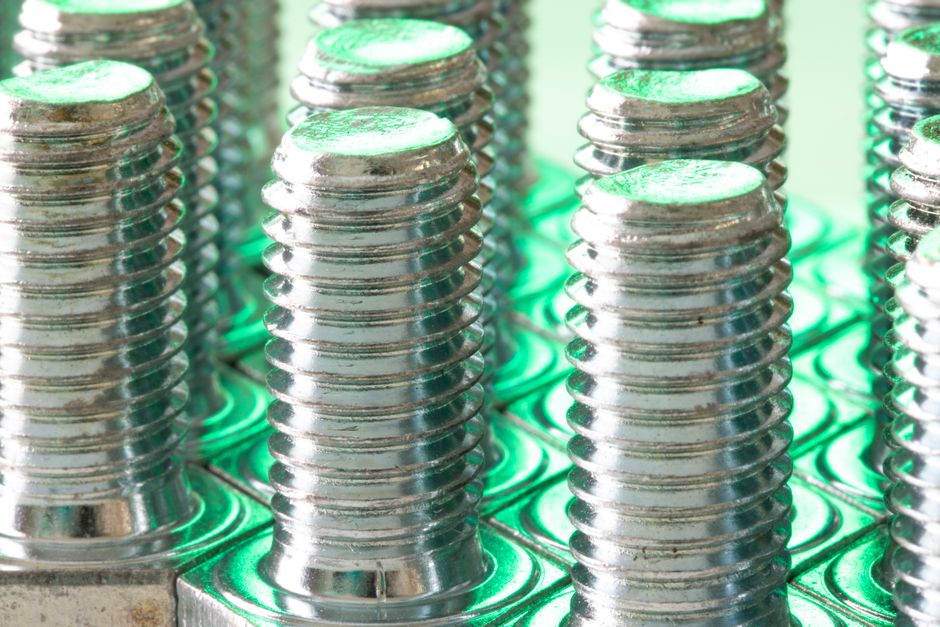
Key Differences Between Threaded Rod and Stud Bolt
The fundamental distinction lies in thread distribution. A threaded rod features continuous threading along its entire length, while a stud bolt has only threaded portions at each end. This difference directly impacts how each fastener performs under load and how they distribute clamping force through a joint.
Thread engagement differs significantly between the two. Threaded rods engage the full length when used through a component, which can create uneven stress distribution if the materials have varying thickness. Stud bolts, with their unthreaded grip section, isolate the clamping force to the threaded end zones, providing more predictable joint behavior.
Load-bearing characteristics also vary. Threaded rods depend entirely on thread shear and tension for their load capacity. Stud bolts benefit from the additional frictional grip of the unthreaded section when compressed between flanges, making them preferable for high-strength hex head bolt assemblies in pressure vessel applications.
When to Use Threaded Rod
Threaded rods excel in applications requiring continuous adjustability and where components of varying thickness need to be joined. General construction uses include hanging supports, structural braces, and anchor points where the fastener must extend through multiple layers or varying gaps. They are also common in electrical and mechanical installations where flat washers and spring washers can be positioned anywhere along the thread length.
The manufacturing sector favors threaded rods for equipment mounting, conveyor systems, and machinery frames where alignment flexibility is essential. Plumbing and HVAC applications frequently use threaded rods as primary structural supports for pipe runs and ductwork. Their continuous threading allows for fine adjustments during installation and future maintenance.
Budget-conscious projects often benefit from threaded rods since they can be cut to custom lengths from standard stock, reducing material waste and lead times. This makes them economical for prototyping and one-off installations where pre-manufactured stud bolts would require custom orders.
When to Use Stud Bolt
Stud bolts are the preferred choice for flange connections in piping systems, pressure vessels, and turbines where reliable, consistent clamping force is critical. The DIN931 grade 8.8 zinc plated hex bolts and stud bolt assemblies create leak-proof seals in applications involving liquids, gases, or steam under pressure. Their design prevents over-compression of gasket materials while maintaining structural integrity.
Oil and gas refineries, chemical processing plants, and power generation facilities rely on stud bolts manufactured to precise specifications. These applications demand traceability and certification to standards like ISO 69487, which governs the design and manufacture of steel bolting for pressure vessels. The predictable load distribution of stud bolts ensures safety in these high-consequence environments.
Aerospace and automotive manufacturing utilize stud bolts in engine assemblies and suspension components where vibration resistance is paramount. The unthreaded grip section prevents fatigue failure that could occur with full-length thread engagement under cyclic loading conditions.
Feature Comparison Table
| Feature | Threaded Rod | Stud Bolt |
|---|---|---|
| Thread Distribution | Continuous along full length | Threaded ends only |
| Typical Applications | Structural supports, adjustability | Flange connections, pressure vessels |
| Load Distribution | Variable along thread length | Concentrated at ends |
| Customization | Cut to any length | Requires specific manufacturing |
| Cost | Lower for standard sizes | Higher due to manufacturing complexity |
| Installation Flexibility | High adjustability | Precise positioning required |
| Common Standards | DIN 975, DIN 976 | ASTM A193, ISO 261 |
Selection Checklist for Your Project
Choosing between threaded rods and stud bolts requires evaluating several project-specific factors. The following checklist helps identify the most appropriate fastener for your application:
- Joint Configuration: Determine if the application requires continuous adjustability (favoring threaded rods) or precise clamping zones (favoring stud bolts).
- Load Requirements: Calculate shear and tensile loads to ensure the fastener meets or exceeds design specifications.
- Material Compatibility: Match fastener material to the mating materials to prevent galvanic corrosion.
- Environmental Conditions: Consider temperature extremes, chemical exposure, and corrosion potential.
- Industry Standards: Verify compliance with applicable codes such as ASME, API, or international standards.
- Maintenance Access: Evaluate whether future disassembly requires special tools or access.
- Budget Constraints: Balance initial cost against long-term performance and maintenance requirements.
Industry Standards and Specifications
Both threaded rods and stud bolts must meet established industrial standards that ensure reliability and interchangeability. The ISO 69487 standard provides requirements for steel bolting used in pressure vessels, covering dimensions, materials, and testing procedures. Manufacturers must demonstrate compliance through documentation and traceability programs.
ASTM standards govern specific applications. ASTM A193 covers alloy steel bolting for high-temperature service, while ASTM A320 addresses materials suitable for low-temperature environments. These standards specify chemical composition, mechanical properties, and testing methods that fasteners must pass before use in critical applications.
Understanding these standards helps procurement specialists and engineers specify the correct fastener for their projects. The Google Search documentation indicates that technical content mentioning specific standards performs better in search results when accompanied by clear, actionable information.
Common Applications and Use Cases
Threaded rods appear prominently in construction scaffolding systems, where adjustable length is essential for uneven surfaces. Steel moment frames use threaded rods as shear connectors between beams and columns. The electrical industry employs them for bus bar support and transformer mounting, where hexagon socket head cap screws DIN 912 are often paired with threaded rods for machine attachment points.
Stud bolts dominate petrochemical plant piping systems where API standards mandate their use for flange connections. Heat exchangers, reactors, and distillation columns rely on stud bolt assemblies to maintain pressure integrity. Nuclear power facilities follow strict regulatory requirements that typically specify stud bolts for critical safety connections.
Marine applications present unique challenges where both fastener types must withstand saltwater corrosion. Hot-dip galvanized threaded rods serve as mooring hardware, while stainless steel stud bolts are specified for deck machinery and hull penetrations where the NIST guidelines on corrosion prevention inform material selection decisions.
Cost Considerations and Procurement
Threaded rods generally offer lower per-unit costs than stud bolts of equivalent material and size. Standard threaded rod stock is widely available from industrial distributors, with high-strength hex bolt full series pricing providing a useful reference point for cost comparisons. Custom-cut threaded rods can be obtained quickly, reducing inventory carrying costs for projects with unusual requirements.
Stud bolts command higher prices due to their manufacturing complexity and the quality control procedures required for critical applications. However, their precise fit and proven performance in demanding environments can reduce overall project costs by minimizing leaks, failures, and maintenance downtime. Total cost of ownership analysis often favors stud bolts for high-consequence applications despite their higher initial price.
Bulk procurement strategies differ between the two fastener types. Threaded rods can be purchased in standard lengths and cut on-site, offering flexibility but potentially generating scrap waste. Stud bolts are typically ordered to exact specifications, which eliminates cutting waste but requires longer lead times and more precise project planning.
Installation Best Practices
Proper installation techniques ensure optimal performance regardless of fastener choice. Threaded rods should be installed with flat washers and spring washers to distribute loads and prevent loosening under vibration. Lock nuts or thread-locking compounds provide additional security in dynamic applications.
Stud bolt installation requires calibrated torque wrenches to achieve specified preload. The Wikipedia article on torque specifications emphasizes that uneven tightening causes gasket failures and joint leaks. Recommended practices include lubricating threads and bearing surfaces, using alternating cross-tightening patterns, and verifying final torque values.
Inspection protocols vary by application criticality. Critical service applications may require ultrasonic thread inspection, magnetic particle examination, and documentation of torque values for each fastener. Non-critical installations typically require only visual inspection and verification of proper thread engagement.
Frequently Asked Questions
Q1: Can threaded rods be used instead of stud bolts in flange connections?
Threaded rods are generally not recommended for high-pressure flange applications because their continuous threading can cause uneven gasket compression. Stud bolts with unthreaded grip sections provide more predictable load distribution and are specified by industry codes for critical service.
Q2: What materials are most common for threaded rods and stud bolts?
Carbon steel (ASTM A36, A307) serves general applications. Alloy steel (ASTM A193 B7) handles high-temperature service. Stainless steel (304, 316) provides corrosion resistance for marine and chemical environments. A193 B7 materials are industry standards for demanding applications.
Q3: How do I determine the correct fastener diameter for my application?
Calculate the required tensile area based on load and allowable stress. ASME codes typically limit allowable stress to one-fourth or one-third of yield strength depending on service conditions. Consult piping or vessel specifications for minimum fastener sizes mandated by design codes.
Q4: Are there differences in how coarse thread vs. fine thread affects fastener selection?
Coarse threads (UNC/UNRC) provide faster assembly and better resistance to cross-threading and fatigue. Fine threads (UNF/UNRF) offer better shear strength and finer adjustment. Coarse thread options are standard for most structural applications.
Q5: What inspection methods verify fastener integrity after installation?
Visual inspection checks for thread damage and proper orientation. Torque verification confirms preload values. For critical applications, bolt stretch measurement, ultrasonic testing, and shear wave inspection detect internal flaws. Inspection documentation supports quality assurance programs and regulatory compliance.