

 Send Email
Introduction
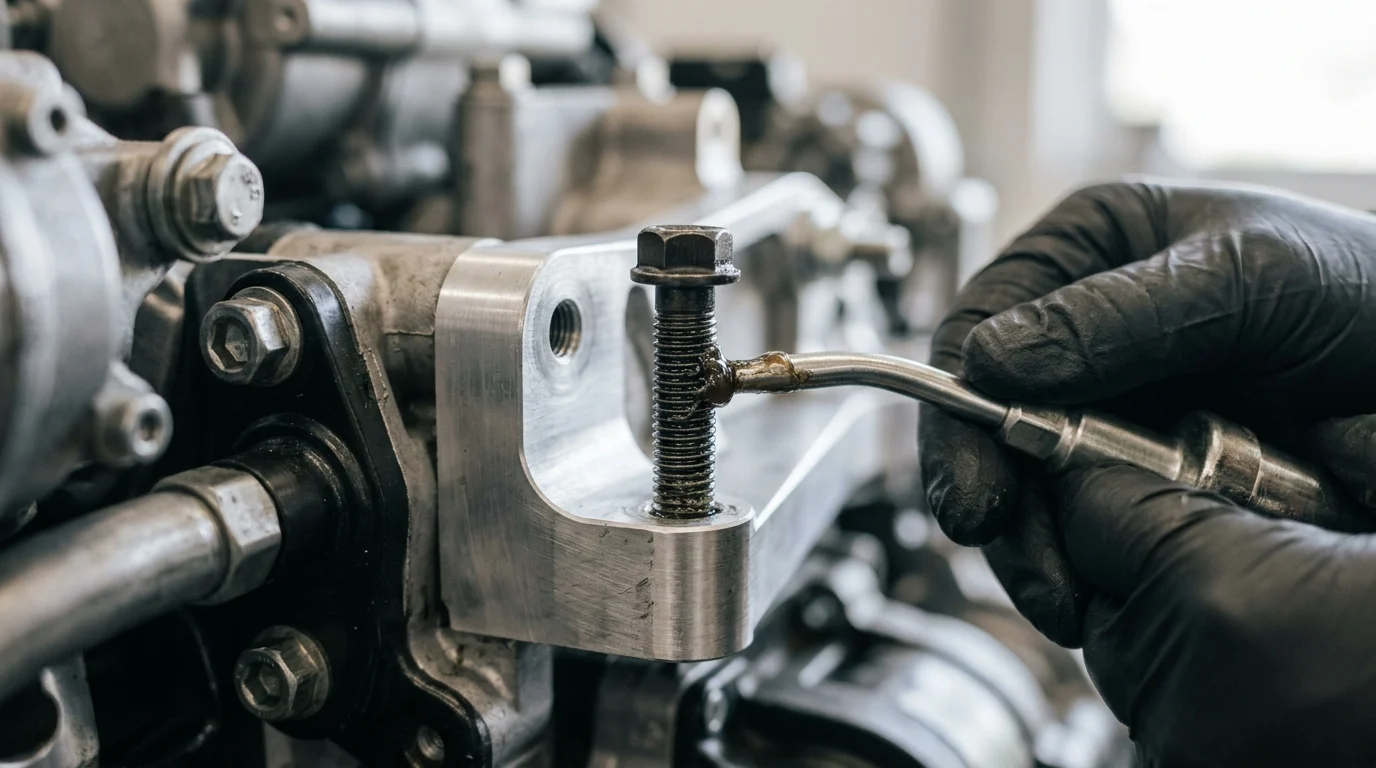
Properly lubricating hex bolts is less about making them turn easier and more about controlling friction, preload, and future serviceability. The right lubricant can reduce torque loss at the threads and under the bolt head, helping fasteners reach a more consistent clamp load while also limiting galling, corrosion, and seizure over time. This article explains why lubrication matters, which lubricants are best suited to common maintenance conditions, and how to apply them without distorting torque results. By the end, readers will understand how better bolt lubrication improves assembly accuracy, simplifies removal, and lowers the risk of damage during routine maintenance.
Why Lubricating Hex Bolts Matters
Industrial fastening relies heavily on the predictable behavior of threaded components under tension. When engineers specify torque values for hex bolts, they calculate the desired clamp load based on the nut factor, commonly referred to as the K-factor. In a completely dry, unlubricated state, the K-factor of a standard steel hex bolt typically ranges from 0.20 to 0.30 depending on surface finish. Applying the correct lubricant fundamentally alters this dynamic, establishing a reliable mechanical foundation for heavy-duty assembly and long-term maintenance.
Impact on installation and removal
The physical mechanics of tightening a hex bolt dictate that up to 90% of the applied torque is consumed by friction—roughly 50% under the bolt head and 40% within the mating threads. This leaves only 10% of the rotational force to generate actual clamping force. Introducing a specialized friction modifier drops the K-factor to a highly predictable 0.10 to 0.15, stabilizing the preload scatter. Consequently, installation becomes smoother and requires less energy, while future removal is shielded from the damaging effects of rust, oxidation, and seizing.
Cost of poor lubrication
Neglecting to lubricate hex bolts carries severe financial and operational penalties. When fasteners seize due to environmental degradation or cold welding, maintenance crews must resort to destructive removal methods such as drilling, cutting, or torching. These interventions routinely inflate labor times by 200% to 300% per compromised joint. Furthermore, unplanned downtime in heavy manufacturing or energy sectors can easily incur costs exceeding $10,000 per hour. Adhering to proper fastening protocols, often guided by global regulatory frameworks, mitigates these severe operational expenditures and preserves asset integrity.
How to Lubricate Hex Bolts Correctly
Achieving optimal joint integrity requires more than simply applying a generic grease. Maintenance professionals must evaluate the specific metallurgical properties of the hex bolt alongside the environmental stressors the joint will face. Correct lubrication depends on matching the chemical composition of the friction modifier to the operational demands and thermal limits of the assembly.
Friction, corrosion, and galling risks
Fasteners manufactured from alloys such as 304 or 316 stainless steel, aluminum, or titanium are highly susceptible to thread galling. Galling occurs when localized friction heat strips the protective passive oxide layer from the metal, causing the threads to cold-weld together. This risk escalates significantly when using power tools at rotational speeds exceeding 150 RPM. Applying an anti-seize compound with a high solids content creates a physical, sacrificial barrier between the mating surfaces, reducing the coefficient of friction (μ) and preventing the microscopic tearing that leads to permanent seizure.
Material and environment factors
Environmental conditions strictly dictate the thermal and chemical limits of the chosen lubricant. Standard petroleum-based greases typically degrade, oxidize, and carbonize at temperatures above 150°C (302°F), rendering them useless in high-heat applications like exhaust manifolds, boilers, or turbines. In contrast, lubricants formulated with metallic solids offer extreme temperature resilience and chemical resistance.
| Base Material | Ideal Hex Bolt Alloy | Maximum Operating Temp | Primary Benefit |
|---|---|---|---|
| Petroleum/Lithium | Carbon Steel | 150°C (302°F) | General moisture barrier |
| Copper Anti-Seize | Steel, Cast Iron | 980°C (1800°F) | Excellent electrical conductivity |
| Nickel Anti-Seize | Stainless Steel, Titanium | 1315°C (2400°F) | Maximum chemical and heat resistance |
| Molybdenum Disulfide | High-Tensile Alloys | 400°C (752°F) | Withstands extreme contact pressure |
Best Lubricants for Hex Bolts
The industrial market offers a vast array of friction modifiers, each engineered for specific operational profiles. Selecting the best lubricant for hex bolts requires a clear understanding of the mechanical differences between fluid oils, thickened greases, and specialized anti-seize pastes.
Oil vs grease vs anti-seize
Light machine oils provide minimal film strength and are generally restricted to low-stress, temporary assemblies where the K-factor hovers around 0.15 to 0.18. Greases, typically thickened with lithium, polyurea, or calcium complex soaps, offer superior stay-in-place properties and act as effective barriers against ambient moisture. However, for critical industrial infrastructure, anti-seize pastes are the superior choice. These compounds contain 15% to 30% solid lubricants—such as graphite, copper, or molybdenum disulfide (MoS2)—suspended in a carrier grease. MoS2, in particular, is renowned for its ability to withstand contact pressures up to 500,000 psi without being squeezed out of the thread root.
How to compare lubricant options
When evaluating competing formulations, engineers must compare several technical specifications to ensure compatibility. The dropping point indicates the temperature at which the thickener melts and releases the base oil, while the base oil viscosity determines the fluid's ability to flow into tight thread clearances (often measured at 40°C and 100°C). Additionally, the washout resistance percentage is a critical metric for marine or washdown environments. Consulting trade and manufacturing data can help procurement teams source high-grade formulations that meet strict regional volatility and environmental compliance standards.
Best Practices for Maintenance Teams
Even the highest-quality lubricant will fail if applied incorrectly. Maintenance teams must standardize their assembly procedures to ensure consistent clamp loads across all equipment. Establishing strict protocols for preparation, application, and torque adjustment is non-negotiable for reliable, data-driven asset management.
Step-by-step lubrication process
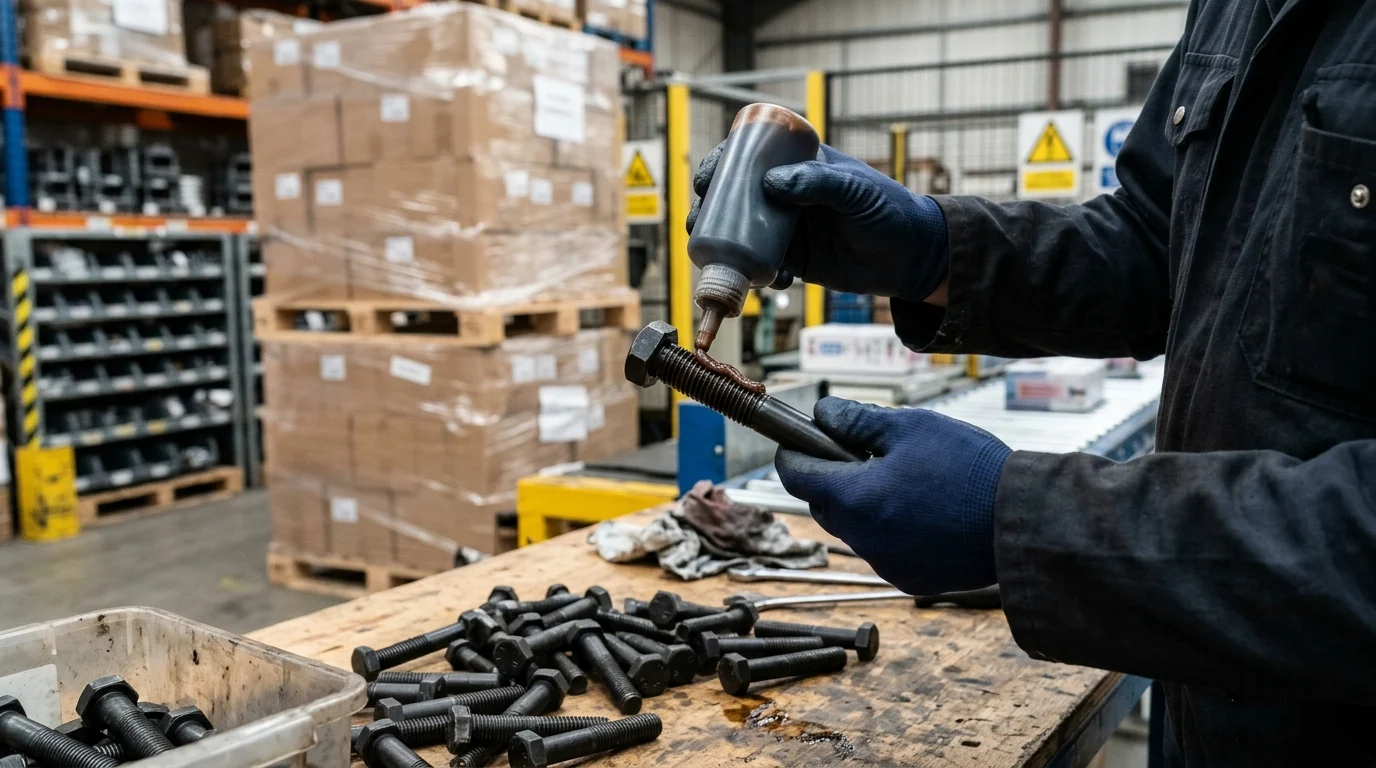
The lubrication process begins with rigorous surface preparation. Technicians must remove all particulate matter, rust, and residual factory oils using a wire brush and an approved industrial solvent. Once clean and dry, the lubricant should be applied evenly to both the male threads of the hex bolt and the bearing surface under the bolt head. Failing to lubricate the under-head bearing surface is a critical oversight, as this area accounts for half of the total rotational friction during the tightening sequence.
Common mistakes to avoid
The most dangerous mistake in bolted joint assembly is failing to recalculate torque specifications after applying a friction modifier. Standard equipment manuals often list "dry" torque values. If a technician applies a high-efficiency lubricant like MoS2 (which lowers the K-factor to roughly 0.11) and tightens the bolt to the dry specification, the fastener will experience a 30% to 45% increase in tensile stress. This severe over-tensioning frequently causes the hex bolt to stretch past its yield point or snap entirely. Additionally, operators must avoid over-lubricating blind tapped holes, which can create a hydraulic lock that fractures the surrounding metal casing.
When to replace bolts
While proper lubrication extends the lifecycle of fastening hardware, it does not grant infinite durability. Maintenance personnel should measure thread degradation during routine teardowns and overhauls. A hex bolt must be permanently retired if visual inspection reveals thread wear exceeding 5% of the original pitch diameter. Furthermore, if micrometers indicate that the fastener has suffered permanent plastic elongation greater than 0.2% of its original length, it has surpassed its structural yield limit and must be replaced immediately, regardless of its surface condition.
How to Choose the Right Lubrication Method
Finalizing the lubrication strategy requires synthesizing operational data, safety requirements, and maintenance schedules. The optimal method balances the upfront cost of specialized compounds against the long-term reliability of the mechanical joint.
Application-based selection criteria
Selection criteria must prioritize the nature of the mechanical load and the regulatory environment. Static joints exposed to heavy weather require highly viscous, water-resistant pastes to prevent galvanic corrosion over years of inactivity. Conversely, joints subjected to intense dynamic loads and high-frequency vibration require lubricants that maintain their film integrity without facilitating self-loosening. In environments heavily regulated by global economic and health standards, such as food processing, agriculture, or pharmaceuticals, technicians are legally required to utilize registered food-grade lubricants (e.g., H1-rated), which strictly prohibits the use of heavy metals like copper or lead.
Recommended approach by use case
To streamline maintenance operations and eliminate guesswork on the floor, facilities should implement a standardized matrix that maps specific use cases to approved lubrication methods and mandatory torque adjustments.
| Application / Use Case | Recommended Hex Bolt Grade | Optimal Lubricant Formulation | Required Torque Reduction (vs. Dry) |
|---|---|---|---|
| General Structural Steel | Grade 5 / Class 8.8 | Zinc-based Anti-Seize | 15% - 25% |
| High-Vibration Machinery | Grade 8 / Class 10.9 | Medium-Viscosity Threadlocker | 0% (Acts as a fluid before curing) |
| Chemical Processing | 316 Stainless Steel | Nickel Anti-Seize Paste | 35% - 40% |
| Extreme Pressure / Heavy Equipment | Alloy Steel | Molybdenum Disulfide (MoS2) | 40% - 45% |
By strictly adhering to these application-specific guidelines and mathematical adjustments, industrial operators can drastically reduce mechanical failures, eliminate destructive disassembly, and maximize the operational lifespan of their critical infrastructure.
Key Takeaways
- The most important conclusions and rationale for Lubricate Hex Bolts
- Specs, compliance, and risk checks worth validating before you commit
- Practical next steps and caveats readers can apply immediately
Frequently Asked Questions
Why should hex bolts be lubricated before installation?
Lubrication lowers friction, improves clamp-load consistency, and helps prevent rust, seizure, and difficult removal during future maintenance.
What lubricant is best for stainless steel hex bolts?
Use a nickel anti-seize for stainless steel or titanium hex bolts, especially where galling, chemicals, or high temperatures are concerns.
Can I use regular grease on all hex bolts?
No. Standard grease suits general carbon steel service, but high-heat or corrosive environments usually need anti-seize matched to the bolt material.
How much lubricant should be applied to hex bolt threads?
Apply a thin, even coat to the male threads and bearing surface under the head or nut. Avoid excess that can contaminate nearby parts.
Where can I find industrial hex bolts and fastening guidance?
You can review hex bolts, threaded products, and related fastening options on CNZYL at cnzyl.com for application-specific selection support.